
Blogs
Perspectives on Human-AI enterprise
Insights on orchestration, governance, and the future of intelligent business systems.
Latest
Mission Control: Oversight Built on the Event Stream
A dashboard built from nightly batch reports tells you what happened yesterday. Mission Control tells you what's happening now, because it reads the platform's own event stream directly, not a report about it.
Prakash Rengarajan
30 Jul, 2026
3 min read
Communication Is the Substrate, Not a Feature
The most consequential sentence in most loan files was typed into a chat app the system will never see. Why Ontoz treats communication as part of the orchestration substrate itself, not a feature bolted on top.
Prakash Rengarajan
28 Jul, 2026
3 min read
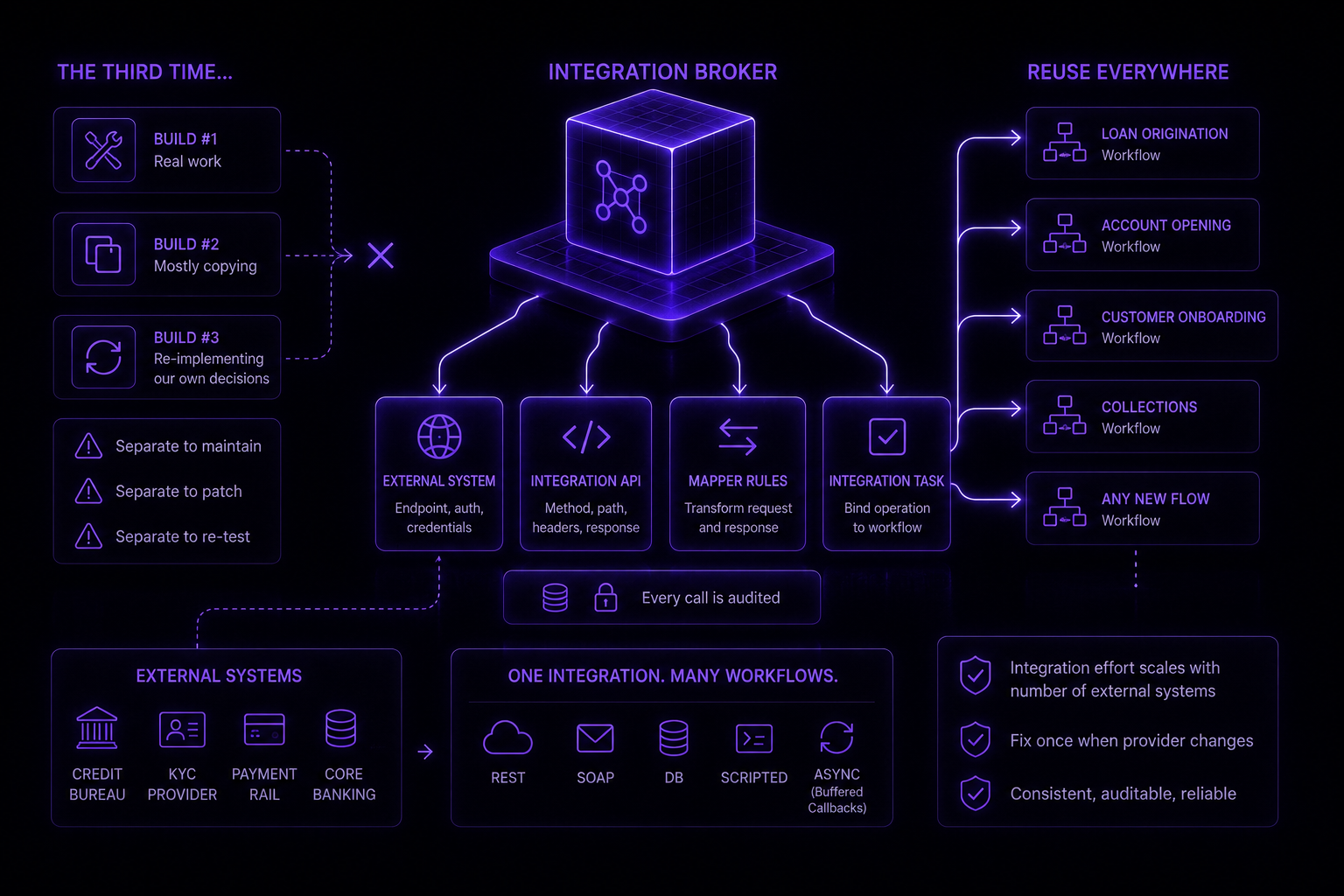
The Integration Broker: Add Once, Available to All
The third time a team builds the same KYC integration, nobody calls it engineering anymore. On Ontoz, an integration decomposes into four declarative constructs, added once and reused by every workflow and every market on the platform.
Prakash Rengarajan
24 Jul, 2026
3 min read
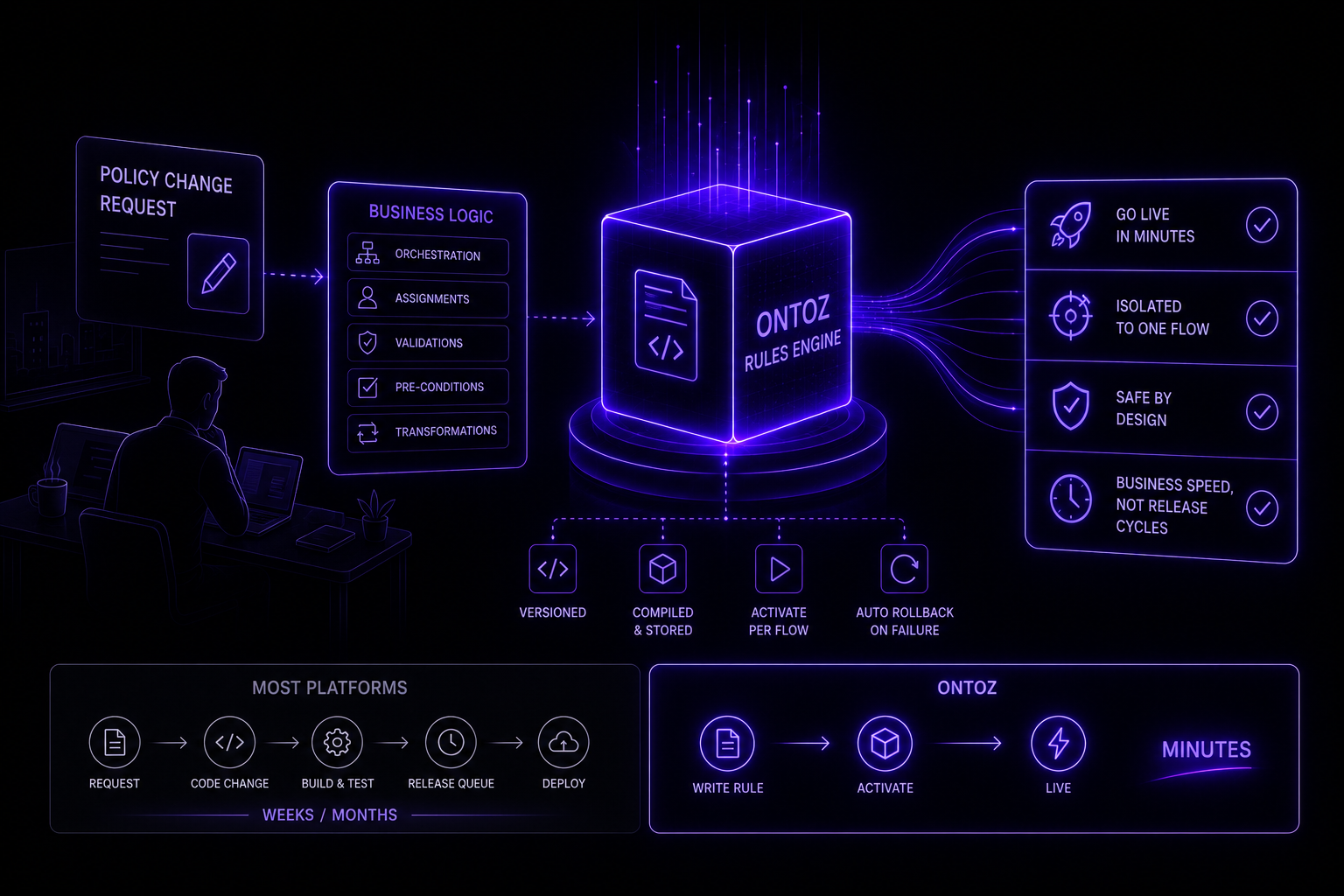
Business Logic That Ships Without a Release
A credit policy change should not sit in a release queue behind unrelated code. On Ontoz, business logic lives as a separate, hot-reloadable artifact, versioned and activated per flow, with automatic rollback if something fails.
Prakash Rengarajan
22 Jul, 2026
3 min read
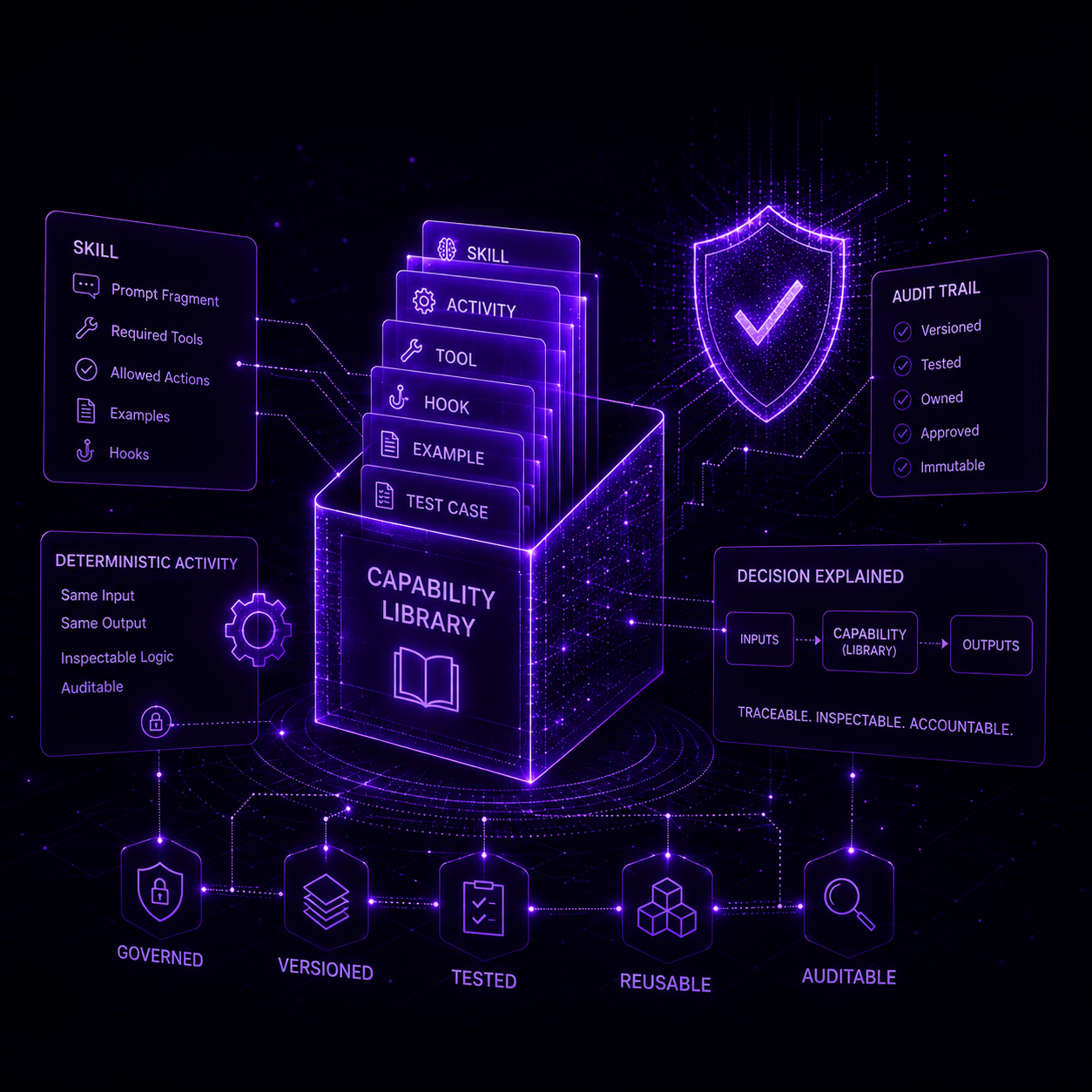
The Capability Library: Where AI Judgment Ends and Auditable Logic Begins
If an auditor asked you to explain a decision your AI made last quarter, would you hand them a prompt? The Ontoz capability library draws a hard line between judgment work built as Skills and rule-driven work built as deterministic Activities, with a rubric and three worked examples for where that boundary actually falls.
Prakash Rengarajan
16 Jul, 2026
3 min read

Sensitive Data Governed at the Data Layer
Data governance is usually a second system — IAM here, policy docs there, audit logs somewhere else — and none of it travels when the data moves. On Ontoz, sensitivity classification is part of the field definition itself: an executable constraint the runtime enforces on every actor, human or AI.
Prakash Rengarajan
6 Jul, 2026
4 min read

Context, Coordination, Control: The Three Pillars of Enterprise Orchestration
Every enterprise AI failure traces back to one of three things: missing context, broken coordination, or absent control. These are not separate problems. Ontoz is built around all three together, as a single design.
Prakash Rengarajan
30 Jun, 2026
4 min read
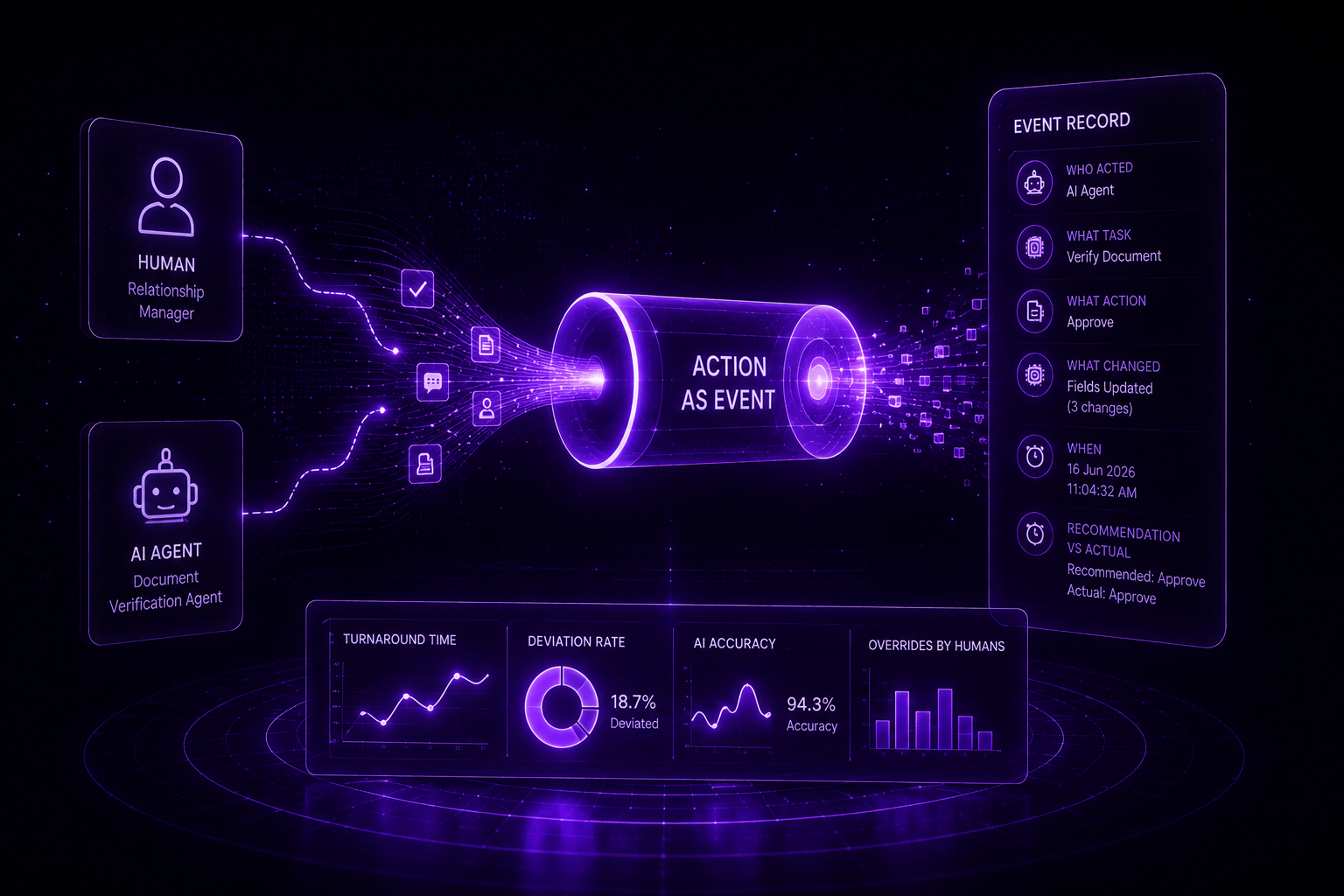
Every Action Is an Event: The Audit Model
Audit trails in most enterprise systems are built around what someone thought was worth capturing. Ontoz approaches this differently: the event record is not attached to the work. It is the work.
Prakash Rengarajan
26 Jun, 2026
3 min read

Hooks: The Deterministic Safety Net for AI Agents
Prompt guardrails are probabilistic — they live inside the model. The parts of your system that must never move need to live somewhere the model cannot reach. On Ontoz, that place is Hooks.
Prakash Rengarajan
23 Jun, 2026
3 min read
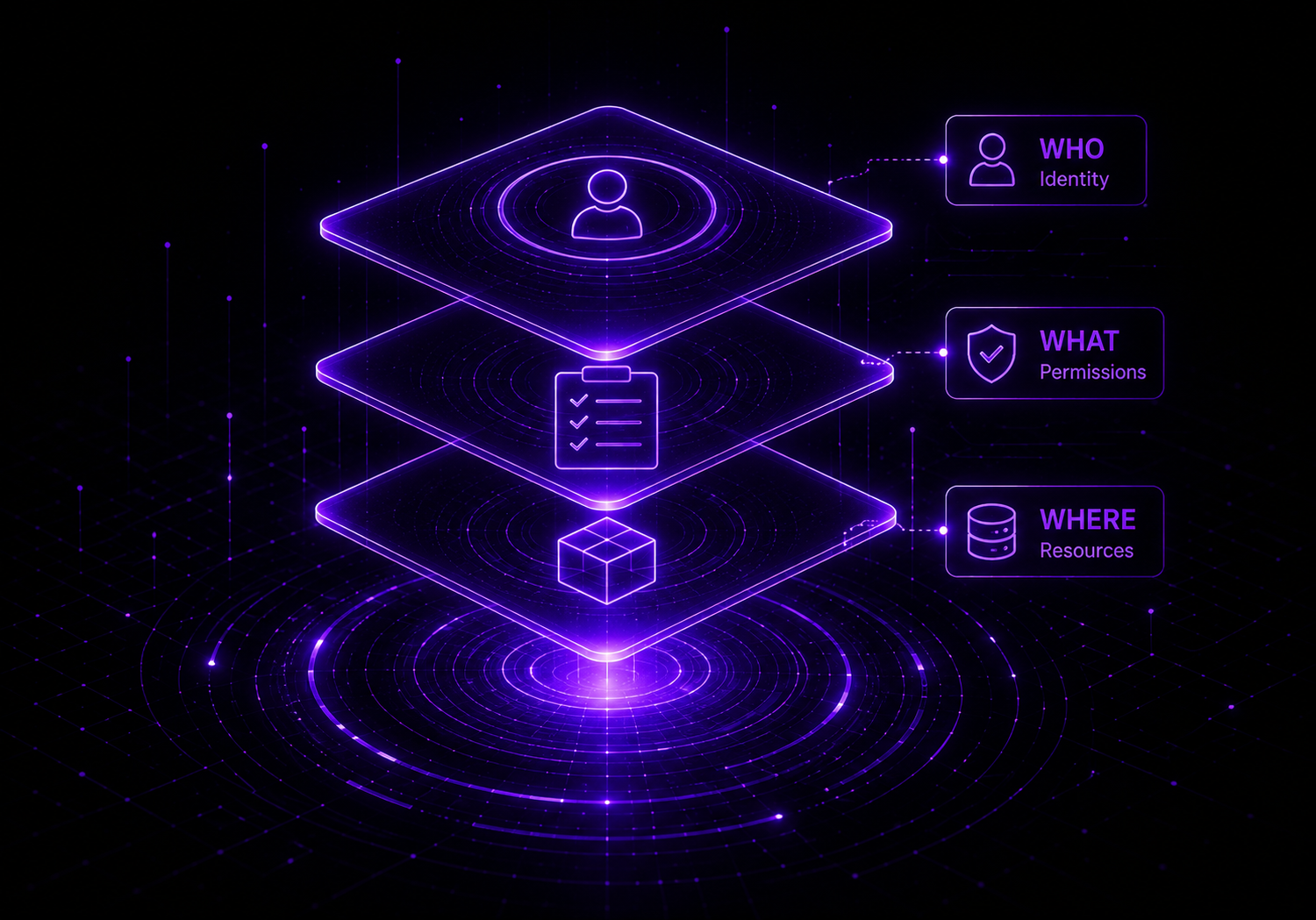
The Three Layers of AI Permissions
The hard question with an AI agent is not what it can do — it's what it must never be able to do. Ontoz enforces this through three stacked permission layers, where the narrowest always wins, moving security from the model's head into the platform's hands.
Prakash Rengarajan
19 Jun, 2026
2 min read

When the Code Is the Document
Every enterprise project carries two descriptions — the specification and the code — and they drift from day one. Ontoz closes the gap with Ontologica: process logic written in business terms that is simultaneously the requirement, the implementation, and the record.
Prakash Rengarajan
16 Jun, 2026
2 min read

Five Levels of Process Modeling in Ontoz
A real business process has structure at more than one altitude. Ontoz keeps these altitudes separate — five distinct levels, each with exactly one responsibility, so you can read, reason about, and change one layer at a time.
Prakash Rengarajan
12 Jun, 2026
3 min read

Copilot or Autonomous Agent? Two Shapes of AI in Enterprise Workflows
The market is saturated with agentic AI claims, but most platforms treat AI as either fully autonomous or fully manual. The real question is architectural: how do you make both options safe for regulated production — and transition between them without rebuilding?
Prakash Rengarajan
8 Jun, 2026
3 min read

The New Future
For two decades, enterprise software has been an exercise in compromise. That era is ending — the new future is software where intelligence, governance, and coordination are properties of the same foundation, not layers stitched together.
Prakash Rengarajan
4 Jun, 2026
3 min read

Why Enterprise AI Stalls — And What It Takes to Actually Fix It
Every large enterprise has a graveyard of AI demos. The prototype worked, the pilot went well, but it died between the demo room and production. Explore the three structural reasons enterprise AI fails and what genuine solutions look like.
Prakash Rengarajan
2 Jun, 2026
4 min read
Foundational Thesis
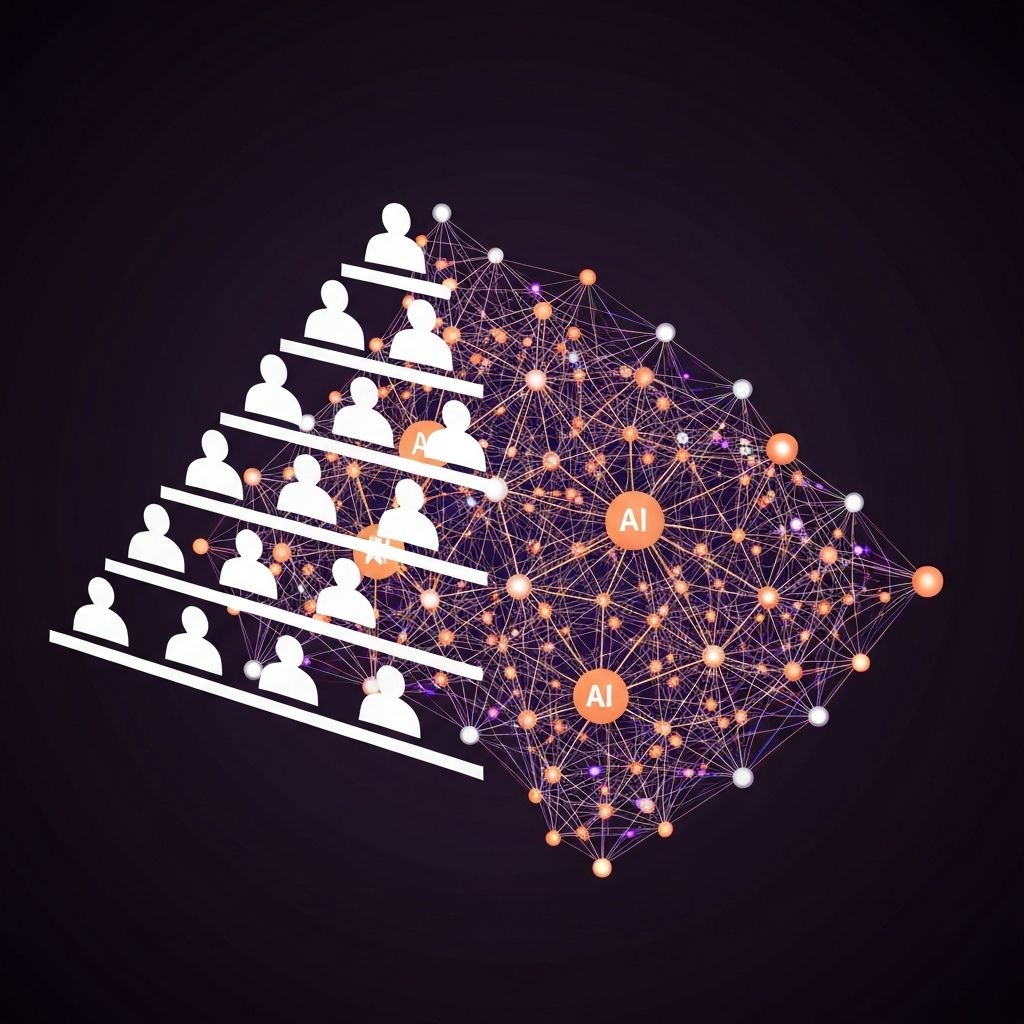
AI is a Structural, Not a Functional Revolution. (7/8)
The corporate hierarchy has built layers of middle management to filter, validate and move information from the front lines to decision-makers. Platforms that hyper-converge roles from front to back offer significant speed and reliability while enabling outcome-focused decision making.
Anand
23 Apr, 2026
1 min read
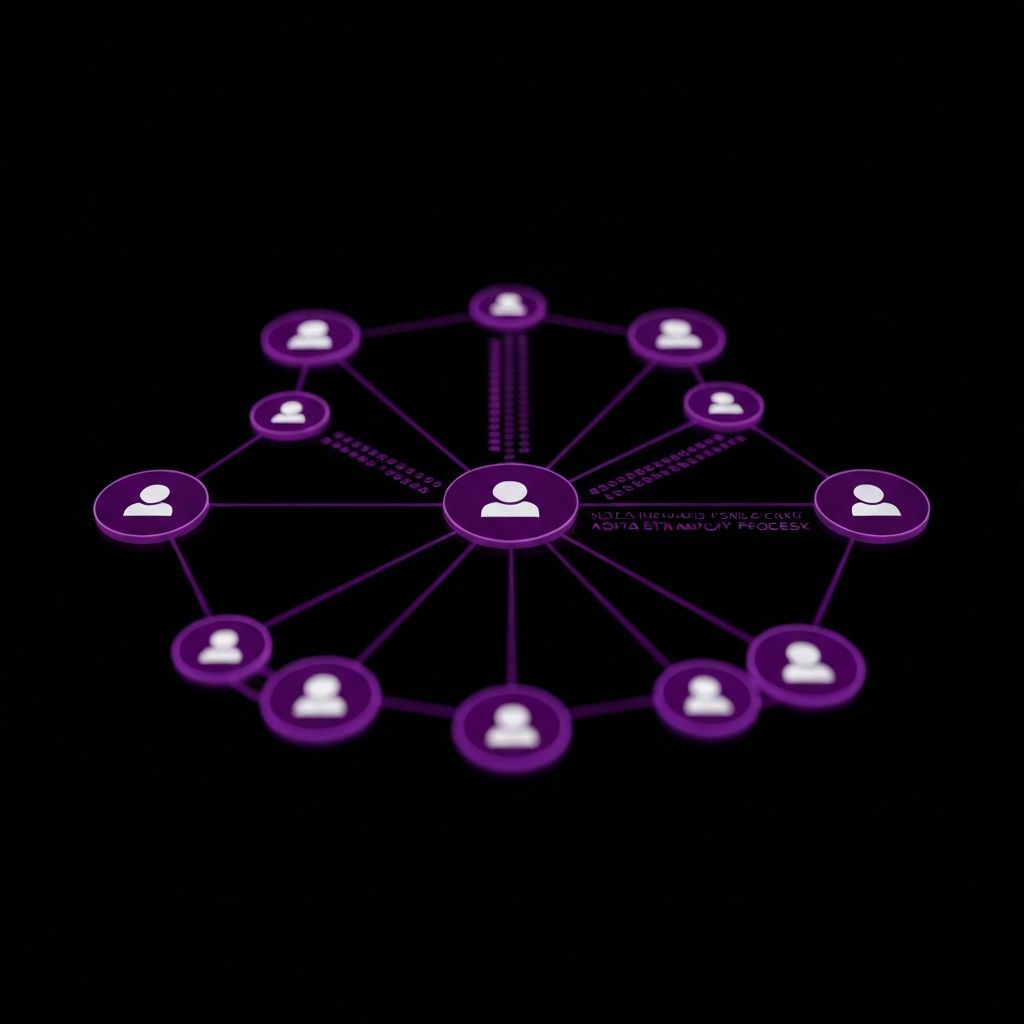
Communication architecture (6/8)
Task-aware agents that are functionally incapable of working in a coordinated ecosystem, and do not cleanly hand-off information (& meaning) at boundaries are a key bottleneck to solving complex business orchestration problems.
Anand
21 Apr, 2026
1 min read

Reliability in the AI-enabled future (5/8)
Testability determines agility. The key to reliable business orchestration is certified reliable digital components. By focusing on reliable, testable tasks and pure math functions, organizations can build complex systems from small, independently verifiable components.
Anand
14 Apr, 2026
1 min read

Crafting intelligent interfaces. (4/8)
Intelligent interfaces are about culture. As AI deployment demands reimagined organizations with leaner, more productive workforces, building such interfaces requires deep business understanding and keen observation. Building is the easy part — imagination is what matters.
Anand
9 Apr, 2026
1 min read

Security, observability and auditability of AI. (3/8)
When determinism is not given, traditional guardrails fail. Fine-grained security controls must operate at the action level. Data audits and observability reveal who took action, what outputs were produced, and whether AI agents remain consistent with peer review.
Anand
7 Apr, 2026
1 min read
Expect domain languages to explode. More open, the better (2/8)
In a world where context matters as much as code, the language of the domain must be expressed separately from the code. A modern domain language must embrace ontological definitions as code, express intent within work context, and enable precise testing.
Anand
31 Mar, 2026
1 min read

Enterprise business orchestration is broken. (1/8)
The space is crowded — legacy players from 20 years ago, low-code platforms, RPA tools. Yet none of them were built for the world we operate in today. Orchestration needs to be deep, non-linear and designed to re-wire culture of work.
Anand
27 Mar, 2026
1 min read